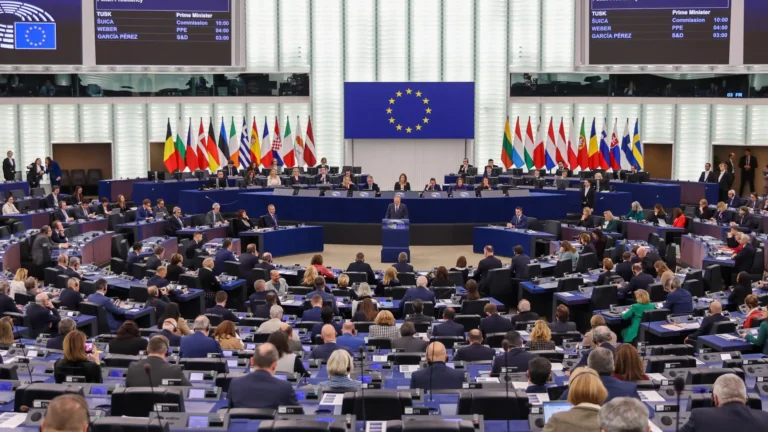
January 2026 — Former U.S. President Donald Trump has unveiled a controversial new international body called the Board of Peace, an organization aimed at overseeing reconstruction and stability efforts in Gaza and potentially addressing other global conflicts. Under a draft charter seen by international media, Trump would serve as the Board’s inaugural chairman and retain significant control over membership decisions.
According to the proposal, countries invited to join may serve standard three-year terms without contributing funds. However, those seeking permanent seats must make a $1 billion contribution toward the Board’s activities. Officials say the funds are intended to support Gaza reconstruction and peace efforts, although the charter itself has not been publicly released.
At least eight nations, including Hungary and Vietnam, have confirmed invitations, and others such as India, Australia, Jordan, Greece, Cyprus, and Pakistan are reported to have received letters of invitation. The United States is expected to announce a formal list of founding members at the upcoming World Economic Forum in Davos.
The Board of Peace is being pitched as a complement to existing international frameworks, but some diplomats have questioned whether it could undermine the role of the United Nations. Only a small number of invited countries have publicly endorsed the plan, with several Western allies expressing caution about the cost and governance structure.
Critics note that Trump’s hard-line stance toward multilateral institutions and the high financial threshold for permanent membership could limit broad global buy-in and raise concerns about transparency and influence. Supporters argue it could offer a more decisive mechanism for post-conflict governance and reconstruction, particularly as the Gaza ceasefire enters its next phase.
TIKTOK PRIVACY POLICY CHANGES FOLLOW U.S. OWNERSHIP SHIFT
January 2026 — TikTok’s U.S. operations have completed a transition to a majority American-owned entity called TikTok USDS Joint Venture LLC, and the company has updated its privacy policy, prompting widespread user attention and concern.

Under the new terms, TikTok may now collect precise location data from users in the United States if location services are enabled, a shift from previous policies that limited collection to approximate location information such as IP or device region. The policy also makes clear that interactions with the app’s AI tools — including user prompts and generated content — can be collected and logged.
The updated terms expand TikTok’s ability to use collected data for advertising and other business purposes. Although the precise location tracking is optional and appears to require user opt-in, the change has raised concerns among privacy advocates and users, many of whom have taken to social media to express alarm about the implications.
The corporate restructuring, involving U.S. tech firms such as Oracle along with private investors, was designed to address long-standing national security issues raised by U.S. lawmakers and regulators. ByteDance, TikTok’s former Chinese parent company, retains a minority stake under the new arrangement.
As the privacy policy rolls out, questions remain about how the changes will affect user experience and data protection, and whether further regulatory scrutiny will follow.
About The Author